







Trending
Trusted journalism isn’t a brand risk. Blocking it is
Published Mi3
There are 23 million potential audience opportunities being left on the table each year as a result of inconsistent, blunt safety practices that keep brands out of the very environments consumers trust most. As we become surrounded by more information yet feel even less certainty in its veracity, it’s critical we move towards more transparent, consistent practices across the media mix.
As we mark World News Day today, we are reminded of the vital role trusted journalism plays around the world, and right here in our own backyard. This year, however, it also prompts a question the marketing industry needs to confront: Are outdated brand-safety practices keeping brands out of the very news environments audiences trust most?
Today, we are surrounded by more information than ever, but not necessarily more certainty. Social feeds blend professional reporting with user-generated content, synthetic media and algorithmic amplification. Generative AI is making it easier to create content at scale, while harder to know what has been verified, what is credible and what deserves our attention.
That is where professional journalism matters.
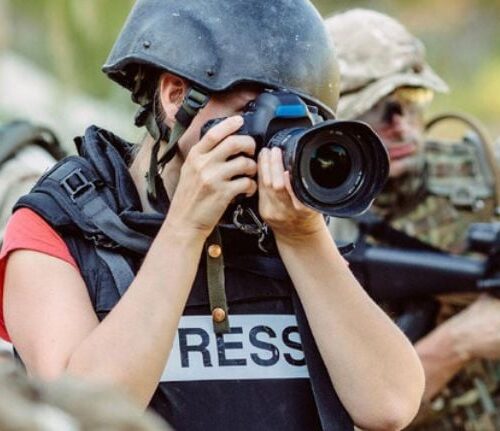
Every day, journalists check facts, verify information, provide context and hold people and institutions to account. They help Australians make sense of events that affect their lives, their communities and their choices.
Australians recognise that value. Earlier this year, ThinkNewsBrands’ News Nation research found 78 per cent of Australians consider national news publishers trustworthy, while almost two in five deliberately turn to news to fact-check information they have seen on social platforms. The trust extends to the brands that advertise there: 85 per cent of Australians say they feel more confident in brands they encounter in a news environment.
The cost of confusing words with risk
The new Beyond Brand Safety: The Trust Advantage report brings the commercial implications into sharper focus.
The Australian-first study found that blunt keyword filters incorrectly exclude two in five brand-suitable news articles. Among lower-sensitivity stories – the type of content generally considered suitable for advertising – 38 per cent were still incorrectly blocked.
At market scale, which represents an estimated $180 million in digital news advertising spend at risk each year and 23 million potential audience opportunities left on the table.
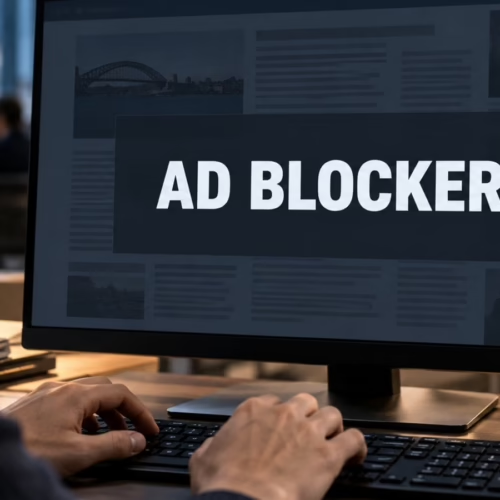
The problem is not the idea of brand safety. Brands should be protected from genuinely harmful or unpredictable environments from the open web and more importantly social platforms. However there’s a major imbalance between the open web, trusted news publishers and major tech platforms. Brand-safety standards are not being applied consistently. Professional news is inherently different from social environments and shouldn’t be subjected to the same blunt brand-safety tools. The problem is treating an individual word as a proxy for risk, regardless of the context in which it appears.
Words such as ‘bank’, ‘crash’ and ‘dispute’ can trigger exclusion rules. The biggest offender identified in the research was ‘Victoria’. ‘Paris’ was also found on an exclusion list years after the 2015 terror attacks, potentially blocking advertising opportunities around the 2024 Olympics.
This is what happens when a list is created once and left to run on autopilot. The technology may be working exactly as instructed, but the instruction is no longer fit for purpose.
News is not unsafe, blunt tools are over-blocking it
The ThinkNewsBrands report also challenges the assumption that appearing alongside higher-sensitivity news automatically creates a reputational penalty. Its nationally representative, ad-adjacency study found core brand outcomes, including favourability, purchase intent and reputation measures, remained effectively unchanged across higher- and lower-sensitivity news contexts. Nearly four in five readers said they judge brands on their own merits rather than conflating an advertiser with the news story around it.
That matters because news is not one homogenous category. It covers business, finance, sport, culture, lifestyle, entertainment, politics and local communities. It is a premium, high-attention environment where audiences actively choose to be informed.
In fact, the report found news delivered around 1.5 times the attention of creator content on social platforms. Excluding it by default is not a neutral act. It can mean reducing reach, limiting attention and directing investment away from trusted journalism without a clear evidence-based reason.
This is why the industry needs to move from blunt brand safety towards smarter brand suitability.
Brand safety should remain the baseline: Protect brands from genuinely harmful content. Brand suitability is the more considered question of whether a particular environment is appropriate for a particular brand, campaign or audience. It uses context, meaning and relevance, not just a word in a URL, headline or article.
A more responsible approach to media investment
The ThinkNewsBrands research points to three practical actions for marketers.
First, know what is being blocked. Ask agencies, verification partners and technology platforms which keyword, category and domain exclusions are active, how often they trigger and what proportion of news inventory they remove.
Second, modernise the settings. Review, reduce and retire unnecessary keyword lists. Use contextual tools available where additional controls are required, and make sure exclusions are proportionate to the actual risk. Stricter settings can still be applied, but they should be deliberate and transparent, not inherited from an outdated list.
Third, invest effectively and responsibly. Consider not only where a brand should avoid appearing, but where it can benefit from trust, context and attention. Professional journalism is a commercially valuable environment precisely because it is researched, edited, verified and accountable.
This World News Day, I encourage every marketer to ask three simple questions:
- What is being blocked on my behalf?
- Why is it being blocked?
- What is that costing my campaign?
The answer is not to remove safeguards. It is to make them smarter, more transparent and more consistent across the media mix.
Trusted journalism matters to Australians, to our communities and to the health of public conversation. It also matters to brands that want to connect with people in environments where they are engaged, receptive and confident in the information they are consuming.
Professional journalism is safe. It should be recognised as a trusted and commercially valuable environment for brands.
Download the full Beyond Brand Safety: The Trust Advantage report here.